
How To Prep And Coat Your Boat Before Winter Storage
TL;DR
QUICK SUMMARY
Winter prep protects a boat long before you put the cover on. Draining trapped water prevents freeze cracks in hoses, pumps, and fittings, and a stabilized fuel tank limits condensation. A deep wash, decontamination, and polish give a ceramic coating a clean surface to bond with, which shields gelcoat and paint through idle months. Ventilated covers, dry indoor storage for soft goods, and early hull repairs round out a season-ready plan.
For many boaters, pulling the boat out of the water for the season comes with a heavy heart. The days on the water are done, yet your boat still needs care and attention before it can sit idle for months. Cold air, trapped moisture, and leftover grime can quietly wear down gelcoat, fade paint, and leave stains that set in by spring.
Good boat winter storage starts as soon as the boat comes out of the water. A careful round of cleaning, draining, and a ceramic coating gives the surface a protective layer that holds up through freezing nights and damp weeks in the yard and ensures your boat will be ready for the spring.
Why Boat Winter Storage Starts at the Surface
Months on blocks or a trailer brings its own set of threats. Moisture collects under covers, bird droppings and tree sap land on exposed areas, and UV rays keep working on gelcoat through uncovered areas. Salt and grime left on the hull continue eating at the finish through the off-season.
Here at Glidecoat, our products trace back to the superyacht world, where finishes face salt, sun, and constant exposure. Those years of experience taught us a simple lesson: keep the surface clean and sealed, even when the boat is idle. A quality marine ceramic coating forms a hard, slick layer over gelcoat or paint, so dirt and water have a tougher time bonding to it. Applying it before storage means the boat goes into winter protected and comes out clean and ready for the water next spring.
Clean and Inspect Below the Waterline
Haul-out day is an ideal time to inspect the bottom closely. Barnacles, slime, and algae can harden quickly once the hull dries, so pressure wash the bottom as soon as the boat clears the water. Use a plastic tool to scrape off stubborn growth and avoid gouging the gelcoat.
Walk the hull slowly and note blisters, cracks, or chips. Small repairs are easier to handle now, with plenty of time before launch. Boats that stay at a slip longer in mild climates face ongoing growth on submerged areas. An underwater anti-microbial surface coating is designed for those surfaces and can help slow the slime and fouling that collect over time. Applying it during a fall haul-out lets it cure well before the boat returns to the water.
Drain Water Before the Freeze
Trapped water causes serious trouble during cold months. It expands as it freezes and can crack hoses, pumps, and fittings. Winterize the engine first, following the owner's manual, then move through the rest of the systems.
Prep and Coat the Exterior
Once the hull is dry and repaired, it is ready to be prepped for ceramic coating. Coatings bond well to bare, decontaminated gelcoat or paint, so skipping prep shortens their life. Also, any imperfections under the surface will get locked in under the ceramic coating.
Pontoon owners face a slightly different job with aluminum tubes that oxidize and pick up waterline stains. A pontoon ceramic coating made for those tubes and decks keeps the surface protected during storage and makes it easier to get into the water once spring arrives. Plan the coating work for a dry day with mild temperatures, and give it time to cure before covering the boat.
Smart Cover Choices for Boat Winter Storage
Remove cushions, canvas, and electronics, and keep them somewhere dry indoors. Roll clear vinyl curtains to avoid creases. Keep batteries on a trickle charger in a ventilated garage.
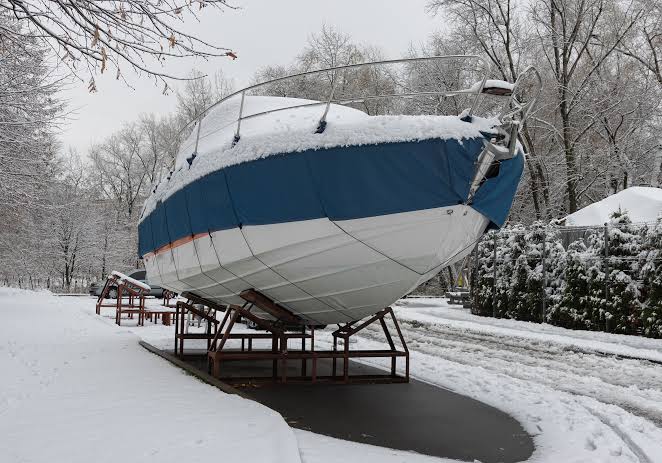
A garage or indoor facility is the ideal shelter. Outdoor boats benefit from professional shrink wrap or a fitted canvas cover with proper framing to hold snow load.
Vents matter here, because trapped condensation leads to mildew and musty cabins. Cheap poly tarps can sag under snow, flap in the wind, and scuff a freshly coated finish, so it's worth skipping them. A few dryer sheets tucked into compartments can also discourage rodents from moving in.
Spring Launch Starts With Fall Prep
While it may seem like a lot of work - a boat put away clean, dry, and coated wakes up ready for the season. The hours spent draining lines, correcting the finish, and sealing the surface pay off with less scrubbing and fewer surprises in spring. Damage avoided now also keeps repair bills down later.
Questions about your hull's winter prep? Talk coatings with our team today.
DISCOUNT
If you made it this far, you've earned this - get 10% off marine ceramic coatings and kits with the coupon code WINTER10.