
Motorcycle Ceramic Coating: Complete Application And Care Guide
TL;DR
QUICK SUMMARY
A ceramic coat gives a motorcycle a hard, hydrophobic layer that resists bugs, grime, UV fading, and heat. Thorough washing, decontamination, and polishing matter as much as the coating itself. Painted panels, chrome, wheels, and engine parts benefit from coverage, and brake rotors, pads, and tire treads stay uncoated for safety. Gentle pH-neutral washes, quick bug removal, and periodic spray boosters keep the gloss and water beading going strong for seasons to come.
Keeping your motorcycle clean and shiny is a point of pride for many bike owners, but motorcycles come with a unique set of challenges for even the most accomplished detailers. Bikes have a variety of surfaces and contours with hard to reach areas, bugs splatter across fairings, road grime coats the lower panels, and engine heat and other high temperature surfaces bake contaminants onto metal. A quality motorcycle ceramic coating adds a hard, glossy layer that helps paint, chrome, and engine parts resist that daily abuse. Getting the best results comes down to careful prep, patient application, and simple post-ride habits.
What a Motorcycle Ceramic Coating Does for Your Bike
Ceramic coatings bond to the surface and cure into a thin, hard protective layer. Water beads and rolls off, so dirt and contaminants have less chance to cling. The coating also guards against UV fading, oxidation, and light chemical staining.
Here at Glidecoat, our coatings started in the marine world, where salt and sun punish exposed surfaces season after season. While motorcycles bring a different challenge with tight curves, mixed materials, and parts that run hot, the experience gained developing a coating that can stand up to the harsh-marine environment has allowed us to create one coating that can be used on all hard surfaces of your bike. This coating made for bikes can bond to paint, chrome, powder coat, and high-temperature areas like engine cases and exhaust. Riders who also look after their cars and trucks with an automotive ceramic coating will feel at home as many of the same habits carry over.
Which Parts to Coat and Which to Skip
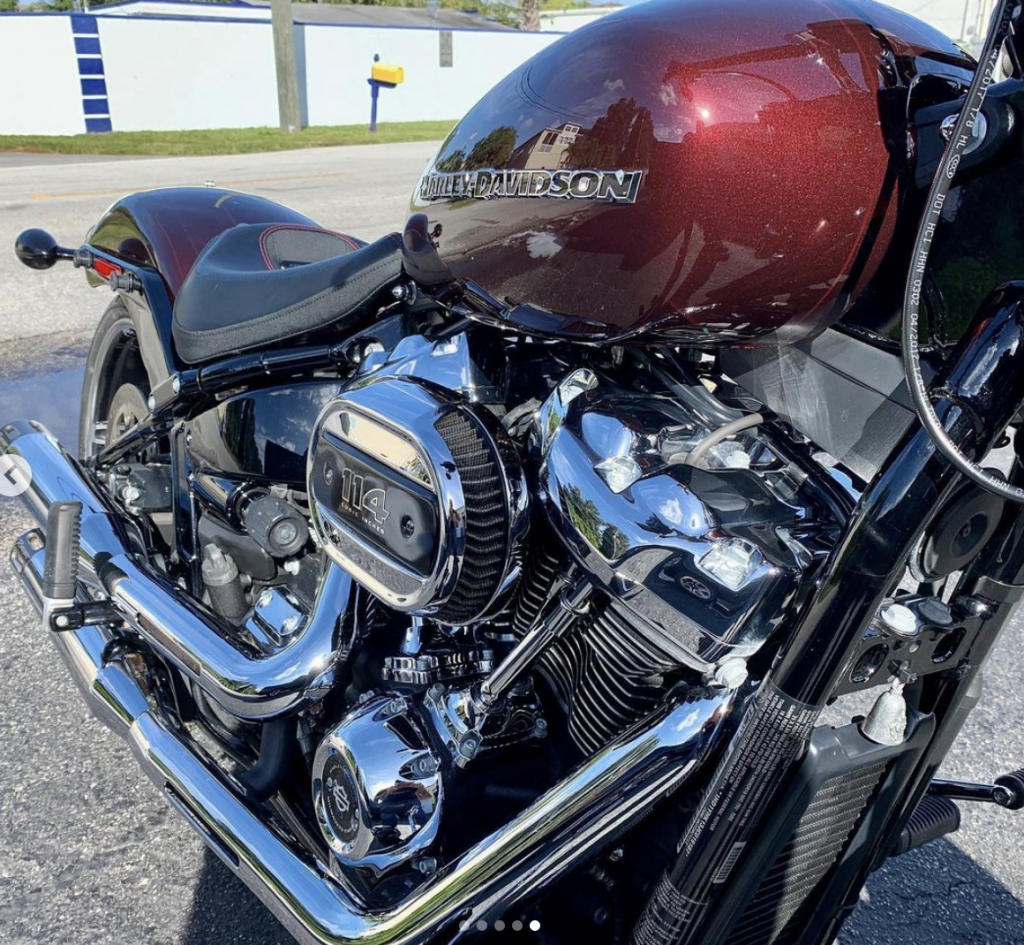
Painted tanks, fenders, and fairings are prime candidates. Chrome, polished aluminum, and powder-coated frames also hold a coating well and become easier to wipe clean. Wheels pick up brake dust quickly, so a coat on the rims can save time at the wash bucket.
Windscreens may take a coating if the product allows it, which helps rain sheet off at speed. Leave brake rotors, pads, and tire treads uncoated, as grip matters far more than shine there. Seats and leather need their own dedicated protectants.
Prep Work That Makes or Breaks the Finish
A coating locks in whatever sits under it, so the surface needs to be spotless and free of defects before application. Work in a shaded garage with the engine cool to the touch.
Applying the Coating Step by Step
Shake the bottle well and add a few drops to the applicator pad. Work one small area at a time, such as half the tank or a single fender. Spread the product in a crosshatch pattern, moving side to side and then up and down.
Watch for a rainbow sheen or light haze, which signals the coating is flashing. Flash times vary with temperature and humidity, so test a small spot first. Level the residue with a short-nap microfiber towel, then follow with a second clean towel for a final buff.
Coat the engine and exhaust while they are cold, and leave the coating to cure before the first start-up. Let the bike rest indoors and hold off on the first wash until the full cure window has passed.
Caring for Your Motorcycle Ceramic Coating Over Time
One of the most common misinterpretations of a ceramic coating is that they are maintenance free or that your motorcycle will not get dirty if it has a ceramic coating. Coated bikes do stay cleaner longer, but the main benefit is that the ongoing maintenance is much easier and more effective than traditional wax. Regular care helps maintain the ceramic coating keeping your bike protected and the gloss and water beading at its peak.
Detailed after-care steps are in our maintenance guide for riders who want a routine to follow.
Detailed after-care steps are in our maintenance guide for riders who want a routine to follow.
Protecting the Ride You Love
A ceramic coat rewards riders who take prep seriously and keep up with gentle care. Clean, polished panels give the coating a solid base, and patient application leaves a deep, lasting gloss.
Simple habits after each ride keep bugs, grime, and sun damage from wearing it down. Connect with our coating specialists if you have questions about coating your bike this season.