
Gelcoat Oxidation: Restore & Protect Your Boat
Quick Summary
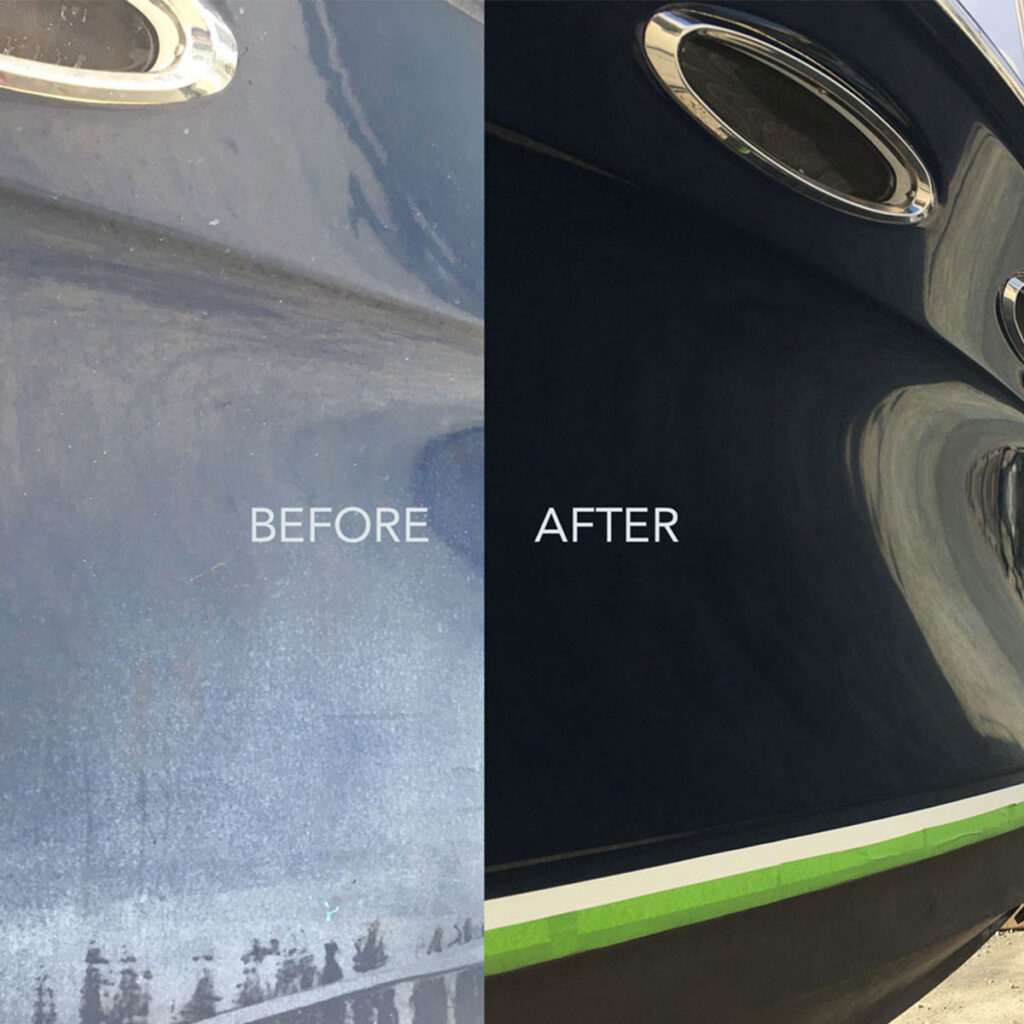
Gelcoat oxidation happens when constant sun and oxygen exposure break down the outer layer of a boat’s fiberglass finish, leaving behind a chalky, faded surface. Light oxidation typically responds well to compounding and polishing, while heavier cases need more aggressive cutting or wet sanding to fully restore the gloss. Protecting the surface afterward with a proper sealant or coating slows down how quickly oxidation returns.
Anyone who has owned a boat for more than a season or two has likely dealt with gelcoat oxidation in some form. That dull, chalky look on the hull isn’t just cosmetic. It’s a sign the surface itself is breaking down, and left alone, it only gets worse with time.
What Is Gelcoat Oxidation?
Gelcoat is the glossy outer layer applied over fiberglass on most boats, and it’s designed to protect the structural material underneath while giving the hull its shine. Over time, ultraviolet rays and oxygen exposure break down the resin in that top layer, causing it to lose its smooth, reflective surface. The result is a faded, dull finish that often feels rough or slightly powdery to the touch.
This process speeds up in boats that sit in direct sun for long stretches, especially in warmer climates where UV exposure is constant year-round. Saltwater exposure, infrequent washing, and skipped coating maintenance all add to the problem, since dirt and salt trapped on the surface accelerate the breakdown even further.
How to Fix Gelcoat Oxidation
The right approach depends on how far the oxidation has progressed. For light to moderate cases, a wash followed by compounding and polishing usually brings back most of the original shine. Compounding uses a mildly abrasive product to cut through the damaged top layer of gelcoat, removing the chalky texture and revealing fresher material underneath. Polishing follows to refine that surface further, restoring depth and gloss before any protective layer goes on.
Working in small sections with a dual-action polisher, rather than trying to tackle the entire hull at once, tends to produce more even results. Rushing this step or skipping polish after compounding often leaves the surface looking flat instead of properly restored.
Oxidized Gelcoat Repair for Heavily Damaged Hulls
Boats that have gone years without care sometimes need a more aggressive oxidized gelcoat repair. In these cases, a heavier cutting compound or wet sanding with fine grit sandpaper may be necessary before polishing can even begin. Wet sanding removes a thin layer of damaged gelcoat entirely, exposing healthier material that responds much better to compounding afterward.
Severe oxidation that has gone deep into the gelcoat, especially where cracking or spider webbing has developed, sometimes requires a full gelcoat repair rather than surface restoration alone. If a hull shows large cracked or peeling areas, it’s worth having a professional assess the damage and recommend restoration or a partial regelling as the better path forward.
How to Remove Oxidation from a Boat and Prevent It from Returning
Once the gelcoat has been restored, protecting that work is just as important as the restoration itself. Knowing how to remove oxidation boat owners deal with every season is only half the process, since keeping it from coming back is what saves the most time and money down the road. Traditional wax breaks down quickly under sun and heat, often needing reapplication every few weeks to keep oxidation at bay. A more durable sealant or ceramic coating creates a longer-lasting barrier between the gelcoat and the elements that caused the damage in the first place.
Beyond the coating itself, regular washing, prompt rinsing after saltwater exposure, and covered storage when possible all slow the pace at which new oxidation forms. Small, consistent habits do more to protect gelcoat long-term than any single product applied once and forgotten.
Restore and Protect Your Gelcoat with Glidecoat
At Glidecoat, we built our surface prep and ceramic coating line specifically for boats fighting exactly this kind of damage. Our Nano Compound and Nano Polish are formulated to cut through oxidation without burning gelcoat, and once restored, our Marine Ceramic Coating or graphene-enhanced ALPHA formula locks in that shine for up to two years instead of a few weeks.
Every product is developed and tested in South Florida, one of the toughest environments for gelcoat anywhere, and our Certified Pro network is available if you’d rather leave a heavily oxidized hull to trained hands. Explore our surface prep and coating lineup today and give your boat’s finish the protection it deserves.
FAQs
Can gelcoat oxidation be fully reversed?
Light to moderate oxidation can usually be restored close to its original shine through compounding and polishing. Severe cases with deep damage may need more aggressive restoration or professional repair.
How often does a boat need oxidation removal?
This depends on climate, storage, and maintenance habits, but boats kept in constant sun without protection often need attention every one to two years.
Does ceramic coating prevent gelcoat oxidation completely?
A ceramic coating significantly slows oxidation by blocking UV rays and contaminants from reaching the gelcoat directly, though ongoing washing and care still play a role in long-term protection.